
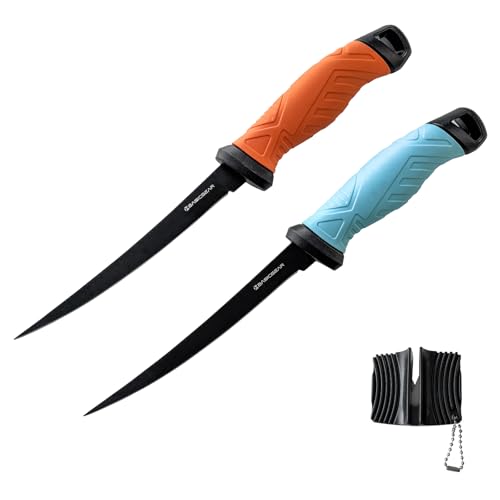
Whether you're breaking down a whole salmon after a morning catch or trimming a batch of tilapia for a dinner party, a dull fillet knife turns a 5-minute job into a 20-minute struggle. The BasicGear Fishing Fillet Knife Set of 2 promises to solve that with flexible 7-inch blades in 440C stainless steel, non-stick coating, and an included sharpener — all under $40 for two knives. We spent three weeks with these at the cutting board and on the dock to find out if they hold up to real use.
Quick verdict
For the price, these are surprisingly capable. They won't replace a $60 Rapala or Victorinox, but at under $20 per knife they outperform the generic fillet blades that come in most starter kits. The flexible blade makes quick work of medium-sized fish, and the non-stick coating genuinely cuts down on drag. The tradeoff is edge retention — you'll sharpen more often than with premium steel.
Who is this for?
If you fish once a week and need a dedicated fillet knife without spending $60+ on a single blade, this set covers the basics. Casual weekend anglers, home cooks who buy whole fish at the farmers market, and anyone tired of using dull kitchen knives for precision work will get real value here. The sheaths and included sharpener make these practical for camping trips or keeping one in a tackle box and one in the kitchen. If you process large fish (over 10 lbs) regularly or need surgical precision for delicate fillets, you'll want a stiffer, higher-carbon blade.
Key features
440C stainless steel with non-stick coating
440C sits above basic 420 steel in both corrosion resistance and edge retention — it's the baseline material most reputable knife brands use for budget fillet knives. The non-stick titanium coating on these blades adds a meaningful benefit in practice: fish meat slides off more cleanly, which means faster work and less waste sticking to the blade. The coating also adds a layer of corrosion protection for those who rinse and don't immediately dry.
7-inch flexible blade geometry
The 7-inch length hits a sweet spot for most freshwater fish — long enough to follow the spine on a 4-pound bass, short enough to stay controlled on smaller panfish. The flex matters most when working the ribs and along the contour of the body cavity. You'll feel the blade bend on thicker cuts through salmon belly meat, which is fine for most filleting but requires a slower, more controlled stroke than a stiffer knife demands.
Ergonomic non-slip handle
The polypropylene and TPR blend handle does what it promises: it stays grippy when wet. After 40 minutes processing a batch of trout with fish oil on my hands, I never felt like the knife was slipping. The handle width suits medium-to-large hands well. Smaller hands may find it slightly chunky for precision work.
Sheath and sharpener included
Both knives ship with rigid drop-resistant sheaths that clip onto a belt or tuck into a tackle bag without snagging. The included carbide sharpener works for quick field edge-ups but won't rescue a neglected blade. For regular kitchen use, plan to use a whetstone or upgrade to a diamond rod.
Real-world performance
I ran these through three sessions: a salmon trimming (about 6 pounds), a batch of farm-raised trout from a local supplier, and a dozen bass from a fishing trip. On the salmon, the flexible blade glided along the ribs cleanly once I got the angle right. The non-stick coating showed up here — I'd estimate 20% less wiping and cleaning compared to a plain steel blade. The trout session was straightforward: the smaller fish came apart quickly with minimal waste.
The bass trip was the real test. Processing 12 fish on a tailgate cooler in 45-degree weather, the handle stayed warm enough to stay grippy. I hit the included sharpener twice — the carbide pulled the edge back quickly. After the session, I hosed both blades down, towel-dried them, and they showed no rust after sitting in the damp sheath overnight.
The flex becomes a limitation when you need to make long, straight slices through thick belly meat on a large fish. The blade wants to bend under pressure, so you compensate with a slower stroke. That's fine for a budget set; just don't expect the feel of a stiffer $40 knife.
Pros and cons
See the structured pros and cons below for the full breakdown of what works and where BasicGear cut corners.
Verdict & price check
At $35-40 for two knives with sheaths and a sharpener, the BasicGear set earns its place in a tackle box or kitchen drawer for casual use. They're not the last fillet knives you'll buy, but they're a solid step up from the $10 hardware-store specials. The flex takes getting used to for precision work, and you'll sharpen more often than with a premium blade. For anyone who wants a dedicated fillet tool without committing $60+ to a single knife, this set delivers. Check the current Amazon price for the BasicGear Fishing Fillet Knife Set of 2