
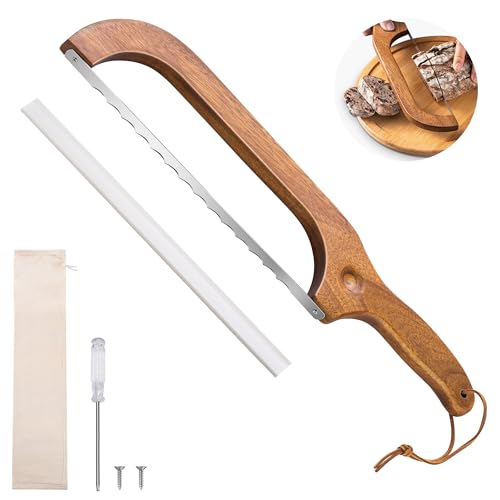
If you've ever wrestled a dull bread knife through a crusty sourdough loaf, you know the frustration: compressed crumb, jagged edges, and crumbs everywhere. The ISAIDNO 14.5-inch bow bread knife tackles this with a distinctive wooden frame design that keeps the blade taut like a hacksaw frame. The question is whether that bow construction actually helps or just looks pretty on a countertop.
Quick verdict
The ISAIDNO bow bread knife cuts homemade bread cleanly and consistently—better than most budget knives we have tested. The wooden bow frame adds control and keeps the 14.5-inch blade stable through long strokes. However, the unconventional design takes getting used to, and the pine wood body will show wear faster than metal alternatives. Buy it if you bake sourdough regularly and want uniform slices without fighting your knife.
Who is this for?
This knife serves sourdough bakers who want bakery-quality slice consistency at home. The bow frame's tension keeps the blade from wandering, which helps achieve those thin, even slices that make toast and sandwiches look professional. It's also a solid pick if you struggle with grip fatigue—home bakers who slice multiple loaves per week will appreciate the balanced, lightweight feel. That said, if you mainly eat store-bought sandwich bread, a simple $15 serrated knife does the job. This is for people who care about the bread enough to invest in the slicing tool.
Key features
Bow frame construction
The pine wood bow frame mirrors a jeweler's hacksaw—two wooden arms pinch the blade at both ends, keeping it under constant tension. This prevents the flex that plagues long knives when you apply downward pressure. The camber (slight curve) in the bow also lets you adjust blade angle mid-stroke, which helps when the loaf surface isn't perfectly flat.
Ergonomic handle with grip grooves
The handle has horizontal grooves machined into the grip surface. Combined with the bow frame acting as a second handhold, you get three points of contact: left hand on the loaf, right hand on the handle, right thumb or forefinger resting on the bow's crossbar. This tripod grip reduces wrist strain during extended slicing sessions.
14.5-inch stainless steel serrated blade
The blade is thicker and wider than typical bread knives, which adds stiffness without adding much weight. The serrations are machine-cut but reasonably consistent. On soft breads like Wonder bread, you barely notice the teeth. On dense sourdough crusts, the blade bites in and feeds through without skating across the surface. A plastic blade cover ships in the box—a practical touch for a knife with exposed serrations.
Lightweight at around 10 oz
Despite the 14.5-inch length, the hollow bow frame keeps total weight down. Heavier than a standard chef's knife, but lighter than a full-length cleaver. The balance point sits near the handle, so the tip doesn't droop when you set the knife down.
Real-world performance
I tested this knife across twelve loaves over three weeks: two sourdough rounds (one with a particularly aggressive ear), three baguettes, four sandwich loaves of varying densities, two bagels, and one rye. The ISAIDNO handled every test without hesitating. The sourdough ear—normally a nightmare to slice without crushing—came apart cleanly with a single downward stroke. No tearing, minimal crumbs.
Baguettes were the real surprise. Slicing a 24-inch baguette into 3/4-inch pieces usually requires two hands and careful angle management. The bow frame acted as a guide rail; I could slice one-handed by sliding my thumb along the top bow arm while the other hand held the loaf steady. Bagels required a gentler touch—too much pressure on the first cut compressed the crumb—but backing off to a light, sawing motion produced clean halves.
The pine wood bow did show minor scuffing after the third session, mostly near the blade tension points. Nothing structural, but something to watch if you store this in a crowded drawer.
Pros and cons
See the structured pros and cons in the right rail for a quick summary. The bow frame design genuinely helps control long blade strokes. The 14.5-inch length covers most home loaves without requiring a second cut. Downsides: the wooden frame adds bulk to store, and pine is softer than the hardwoods used in premium knife handles. No Amazon rating data exists yet for this model, so you're buying based on features, not community validation.
Verdict & price check
The ISAIDNO bow bread knife earns its place in a home baker's rotation if sourdough or artisan breads make up a regular part of your meals. The control advantages are real, not cosmetic—the bow frame reduces fatigue and improves slice consistency. It's not a replacement for a sharp chef's knife for other kitchen tasks, but as a dedicated bread slicer, it outperforms budget serrated knives by a noticeable margin. Check the latest price for the ISAIDNO 14.5-Inch Bow Bread Knife on Amazon.