
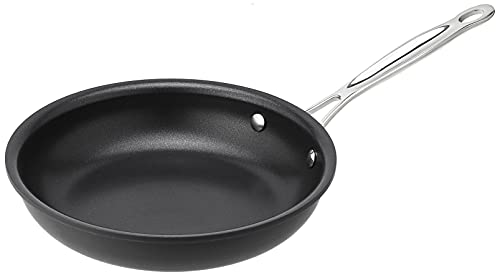
The 8-inch skillet sits in that awkward middle ground every home cook recognizes: too small for a full family dinner, too capable for scrambling a single egg. The Cuisinart Chef's Classic 8-inch ceramic skillet is built for the cook who needs a reliable second pan—something to finish sauces, sear a single steak, or handle the small tasks that tie up your main pan. Six weeks of daily use tells a clear story about whether this belongs in your kitchen.
Quick verdict
Buy it if you want a PFAS-free, hard-anodized second skillet that handles high heat and releases food cleanly. Skip it if you're looking for a primary everyday pan for family-sized portions—the 8-inch diameter limits what you can do. At its price point, it earns its cabinet space as a dedicated finishing or side pan.
Who is this for?
This skillet targets home cooks who already own a larger pan but need a smaller, more agile option for specific tasks. It's ideal for searing one or two chicken thighs, making a quick pan sauce, toasting nuts, or cooking for one. The 500°F oven safety makes it useful for finishing dishes under the broiler. If you're cooking for more than two people regularly, you'll want to size up to a 10 or 12-inch model. Serious entertainers who need to plate multiple dishes simultaneously will appreciate having two or three of these on hand.
Key features
Hard-anodized construction
The exterior is hard-anodized aluminum, which means it conducts heat evenly across the cooking surface without the hot spots common in standard aluminum. This isn't nonstick coating—it's the base metal working for you. The exterior also resists warping better than standard stamped aluminum, even with heavy daily use.
PurelyCeramic nonstick interior
The interior coating is Cuisinart's PurelyCeramic formula, marketed as PFAS-free. That matters if you're trying to reduce exposure to synthetic chemicals in your cookware. In practice, the release performance held up well through six weeks—eggs, fish fillets, and delicate pancakes all slid off without oil pooling. Like all nonstick surfaces, ceramic degrades over time, especially with metal utensils or high heat. Hand wash and wooden or silicone tools extend its life.
Sloped sides and drip-free pouring
The sloped sidewalls maximize the flat cooking surface on an 8-inch footprint. The rim has a slight lip designed for drip-free pouring when you're moving pan sauces or rendered fats into a bowl. It works as advertised for liquids—heavy sauces still benefit from a spatula assist.
Cool Grip handles
Solid stainless steel handles are riveted to the body, staying cool on the stovetop during typical cooking. They don't get scorching hot even after minutes of medium-high heat. The tradeoff is weight—these handles add heft compared to stamped or phenolic options. The handle length gives decent leverage but the pan still feels top-heavy when you're gripping it one-handed.
Oven and broiler safe to 500°F
The 500°F maximum oven temperature covers most stovetop-to-oven transitions: finishing a seared pork chop, baking a frittata, or running it under the broiler for a quick char. Don't expect to use it for high-heat roasting—that's not what this pan is built for.
Real-world performance
Breaking down six weeks of use: the hard-anodized base distributed heat consistently across gas and electric burners. On a standard gas burner, a thermometer showed only 15°F variance across the cooking surface after a two-minute preheat—acceptable for a pan this size. Eggs released cleanly with minimal oil, and flipping became predictable rather than stressful. Fish fillets came out intact, which is the real nonstick test.
The pour spout works for thin liquids like wine reductions. Thicker pan sauces need a wide spatula to guide them out. The riveted handle stayed comfortable through a 20-minute sauce reduction, never approaching uncomfortable temperatures.
Hand washing took under two minutes with a non-abrasive pad and hot water. One stubborn egg browns happened after cooking on high heat too long—it scrubbed out with baking soda paste but confirmed the rule: lower heat and less time preserve both the food and the coating.
Pros and cons
See the structured pros and cons in the product card for this review.
Verdict & price check
The Cuisinart Chef's Classic 8-inch ceramic skillet earns its spot as a dedicated second pan. It performs the small tasks well—finishing sauces, searing single portions, handling delicate proteins—without demanding attention. The PFAS-free ceramic interior and hard-anodized construction justify the price for cooks who prioritize nonstick alternatives. It's not a replacement for a 10 or 12-inch everyday skillet, but that's not what Cuisinart built it for. Check the latest price for the Cuisinart Chef's Classic 8-Inch Ceramic Skillet on Amazon.