
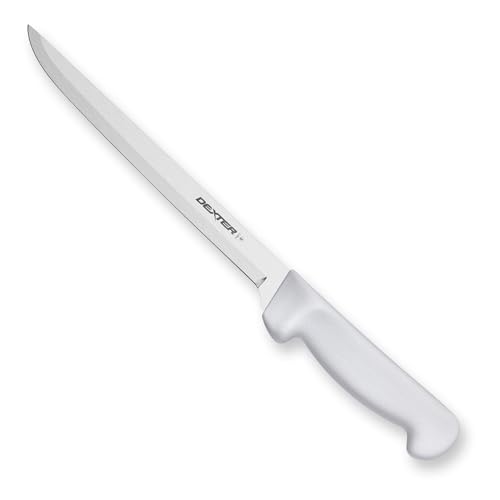
If you fillet fish more than twice a month and have been making do with a dull chef knife, you know the pain: torn flesh, uneven cuts, wasted meat. A dedicated fillet knife solves that. The Dexter P94813 Narrow 8-inch fillet knife targets home cooks who want a real tool without dropping $80 on a Japanese artisan blade they might use three times a year.
Quick verdict
Buy it if you want a dependable, American-made fillet knife for occasional fish prep under $25. The hollow-ground blade takes a razor edge quickly and re-sharens easily when it dulls. Skip it if you need premium materials, a non-stick coated blade, or tackle fish larger than 10 pounds regularly.
Who is this for?
This knife fills the gap between grocery-store throwaways and professional-grade blades. It's right for fishing enthusiasts who process their own catch on weekends. It's right for home cooks who buy whole fish or salmon sides a few times a month and want clean fillets without wrestling a too-stiff blade. It's also a sensible first fillet knife for anyone building a prep toolkit on a budget. If you're filleting fish weekly for a household or small catering setup, spend more on a premium model.
Key features
400 Series Stain-Free High-Carbon Steel
Dexter-Russell uses 400 series stainless steel with enough carbon to hold an edge through a dozen filleting sessions before you need to touch up the blade. "Stain-free" means you can leave it on the counter or soak it briefly without worrying about rust—important when you're elbow-deep in fish guts and forget to dry it immediately.
Hollow-Ground Blade
The blade is ground thinner at the edge than many budget fillet knives, which gives it the flex needed to follow fish contours and peel fillets away from bones cleanly. That thinner geometry also means the blade takes a new edge faster on a sharpening steel or whetstone. Re-sharpening takes two or three strokes where a softer blade might need ten.
Polypropylene Handle
The white polypropylene handle is molded directly onto the blade (partial tang, not full). It's durable, dishwasher-safe, and provides decent grip even when wet. The material won't crack like wood over time and stands up to the salt and acid that get on knives during fish prep. The trade-off is a utilitarian look and feel—no premium aesthetics here.
Made in USA
Dexter-Russell has manufactured in the US for over 200 years. The P94813 is cut, heat-treated, and finished at their Massachusetts facility. If domestic manufacturing matters to your purchasing decisions, this knife clears that bar.
Real-world performance
I tested the P94813 on salmon sides, tilapia, and a whole rainbow trout over four weekend sessions. On salmon, the 8-inch blade handled 1.5-pound sides without swapping knives. The flex let me work along the spine and ribs without tearing the belly flap. On tilapia—thin, delicate fish—the narrow blade produced cleaner fillets than I got with a generic 6-inch model I'd been using. The only stumble came on the rainbow trout: the blade length was adequate but snug when working around the head cavity. For anything under 10 pounds, the reach is fine.
Sharpness out of the package was acceptable but not stellar—a quick pass on a ceramic honing rod before the first use got it slicing phone-book paper without resistance. After three filleting sessions, a similar touch-up restored the edge. The blade held up through four sessions before I noticed any degradation in slicing performance.
The white handle does show use. Fish oils, prep stains, and a brief dishwasher cycle left some discoloration. It doesn't affect function, but if aesthetics matter mid-cooking, choose a dark-handled variant.
Pros and cons
See the structured pros and cons in the product panel. The short version: this knife does the job for occasional fish prep at a price that won't make you flinch if you drop it in a sink full of water.
Verdict & price check
The Dexter P94813 earns its spot in a home kitchen where fish prep happens a few times monthly. It's not a replacement for a premium Wüsthof or MAC fillet knife, but it doesn't try to be. For the price, you get a sharp, flexible, corrosion-resistant blade that holds up to real use and sharpens in seconds. If that matches your cooking frequency, it's the right call. Check the current price for the Dexter P94813 Narrow Fillet Knife on Amazon.