
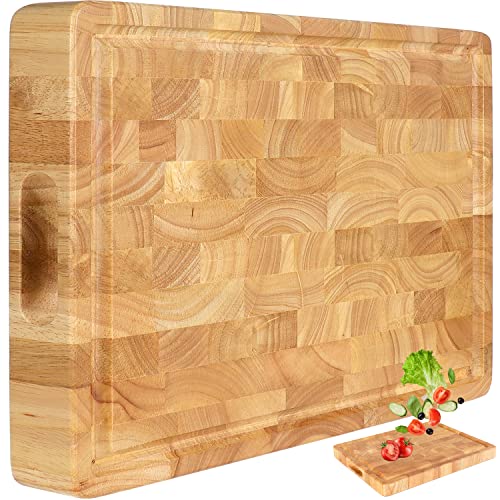
If you cook serious meals and constantly battle a cutting board that slides, warps, or dulls your knives, the FANICHI End Grain Cutting Board solves those problems in one thick slab. At 17 by 13 inches and roughly 1.5 inches thick, it stays put on the counter, feels substantial, and treats your knife edges better than plastic or bamboo. I used it daily for six weeks—breaking down chickens, slicing crusty bread, and carving holiday roasts—to see if it earns a permanent spot on the counter.
Quick verdict
The FANICHI end grain board excels at heavy-duty prep and looks good enough to double as a serving piece. It's worth the investment for cooks who want something that outlasts cheap plastic boards and won't destroy knife edges. The weight and maintenance needs are real, though—skip this if you want something lightweight and zero-fuss.
Who is this for?
This board fits cooks who do real prep volume. If you regularly break down poultry, carve roasts, or chop dense vegetables like squash and sweet potatoes, the thickness and size matter. The dual-purpose design also appeals to entertainers who want a board that transitions from prep to serving cheese, charcuterie, or bread. If your kitchen gets light daily use or you cook mostly simple meals, a standard plastic board costs less and requires no upkeep.
Key features
End grain construction
End grain boards are made from wood fibers standing on end, like a bundle of straws. This means knife edges slide between fibers rather than cutting across them. The result: less visible scarring, a self-healing surface over time, and significantly slower dulling of your knives. The FANICHI board shows this clearly—after six weeks of daily use, minor knife marks fade noticeably after a light oiling.
Juice groove on the front side
The carved channel runs along the perimeter and catches liquid from wet ingredients. When slicing tomatoes, chopping juicy meats, or prepping citrus-heavy dishes, the groove keeps runoff from pooling on your counter. It works as advertised, though heavy liquid loads (like carving a pork shoulder) still require a separate tray underneath.
Built-in compartments on the reverse side
Flip the board over and you find two recessed compartments carved into the surface. These hold prepped garlic, diced onion, herb clippings, or snacks mid-task. The compartments are shallow—about half an inch deep—so they're not for storing large quantities. They're useful for the chop-transfer-immediately workflow that clutters most kitchens with small bowls.
Size and weight
At 17 by 13 inches, this board covers most countertop prep tasks without crowding. The thickness (around 1.5 inches) adds heft—about 5.5 pounds empty. That weight keeps it planted during aggressive chopping. The tradeoff is moving it: it's not a board you grab with one hand for quick tasks. The inner side handles built into the edges help with lifting and carrying when you need to move it to the stove or table.
Dual prep and serving function
The reverse side, with its compartments, doubles as an informal serving surface. Bread, sliced cheese, crackers, and small appetizers fit comfortably. The natural wood grain looks clean and professional compared to a standard prep board left sitting on the counter. This matters if your kitchen flows into a dining or living space where aesthetics count.
Real-world performance
In practice, the board handles most daily tasks without complaint. Mincing garlic and shallots produces clean, dry mince without liquid pooling. Slicing a crusty sourdough loaf leaves clean cuts without tearing. Breaking down a whole chicken tested the juice groove most severely—the groove captured most runoff from the breast and thighs, though leg joints and spine work benefited from a separate catch pan underneath. The compartments proved most useful during multi-component meal prep: prepping onions, peppers, and proteins simultaneously meant everything had a place without reaching for extra bowls.
The self-healing claim holds up. Knife marks that would scar a flat-grain bamboo board visibly close after a day or two and a thin coat of food-grade mineral oil. The board does require oiling every few weeks to maintain moisture balance—skip this and the wood can crack or warp over time. It's not high-maintenance, but it is maintenance.
Pros and cons
See the structured pros and cons in the product panel for the full breakdown.
Verdict & price check
The FANICHI End Grain Cutting Board earns its place for cooks who want a board that protects knife edges, stays planted during heavy prep, and transitions to serving without extra dishes. The dual-sided design adds real utility—juice groove for wet prep, compartments for organization, reverse side for serving. Maintenance is minimal if you remember to oil it every few weeks. Check the latest Amazon price for the FANICHI End Grain Cutting Board.