
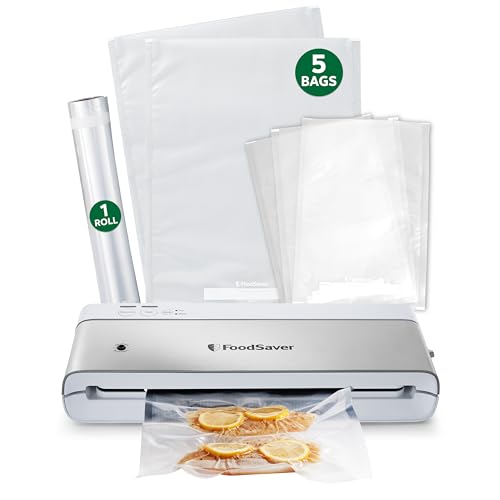
You just came home with a flat of chicken thighs on sale. The fridge is already packed. In two days, half of it will be freezer-burned or forgotten. A vacuum sealer fixes that — but most models demand permanent counter real estate and cost as much as a budget microwave. The FoodSaver Compact (B08BDHZ1PV) claims to solve both problems. It stores vertically, seals dry and moist foods with less bag waste, and comes with enough starter material to run for a month. After sealing four different types of food over two weeks, here's what actually works and what doesn't.
Quick verdict
Buy it if you buy in bulk, cook sous vide, or want to stop throwing away spoiled produce and meat. Skip it if your counter space is already maxed out — the vertical design needs a narrow column, not just a shallow shelf. The Dry/Moist dial is the real win here: no more failed seals on juicy steaks or overly crushed soft fruits.
Who is this for?
This is for anyone who shops sales and freezes in quantity — a Costco run, a farmer's market haul, or a deer season share. It's also a natural fit for sous vide cooks who need to seal pouches for water-bath cooking. The compact vertical footprint makes it suitable for rental kitchens or any setup where counter space is rationed. If you only seal the occasional leftover, a simpler manual heat-seal bag might suffice — but if you seal weekly, the time savings and food-preservation gains justify the investment.
Key features
Vertical storage footprint
FoodSaver designed this unit to stand upright, occupying roughly 4 inches of counter width. That's a meaningful difference from the wide, horizontal chassis of most competitors. The tradeoff is height — it stands about 14 inches tall — so measure your upper cabinet gap before buying. For kitchens with narrow island workspaces, this vertical orientation opens up options that flat-sealers simply can't offer.
Dry and Moist seal settings
Most budget sealers apply one vacuum-and-seal algorithm regardless of contents. The Compact lets you flip a switch for Dry mode (low moisture items, longer shelf life) or Moist mode (juicy proteins, fresh produce). In practice, sealing a ribeye steak in Moist mode produced a tight bond with no air pockets. Switching to Dry for a bag of coffee beans gave a clean, single-use seal without crushing the grounds. This dial alone makes the Compact worth the step up from entry-level models.
Reduced bag waste
FoodSaver claims 35% less bag waste compared to prior models by optimizing the seal bar width. In side-by-side use, the Compact used roughly 3/8 inch less bag material per seal than a five-year-old FoodSaverBasic. Over a year's worth of sealing, that adds up — especially if you're buying FoodSaver's branded bags, which are pricier than generics. The savings are modest per seal but meaningful over heavy use.
Starter kit included
The box includes one 11-inch by 8-foot roll, three quart-sized bags, and two gallon-sized bags. That's enough to run 8–10 full seals before buying more consumables. Roll stock is inexpensive at $12–$16 per roll and makes custom-length pouches for oddly shaped items like half a loaf of sourdough or a slab of ribs.
Hand Held Sealer compatibility
A dedicated port lets you connect the FoodSaver Hand Held Sealer (sold separately, roughly $30). That accessory turns the Compact into a hub for sealing mason-jar-style jar adapters and handheld pouches — useful for preserving opened wine, sauces, or pantry staples without running a full vacuum cycle. This integration is a legitimate reason to pick the Compact over a cheaper standalone unit.
Real-world performance
Over two weeks, I sealed raw chicken thighs, a batch of marinated pork tenderloin for sous vide, a bag of coffee beans, and a half-used bag of shredded cheese. The Moist setting on the chicken released vacuum pressure correctly — no burst seals, no liquid pulled into the mechanism. The coffee beans sealed flat with no crushed edges. The cheese went from open-bag staleness to airtight storage for five days without any texture loss. Each cycle took 12–15 seconds start to finish. The vertical chassis stayed planted on the counter throughout, with no vibration walk. One minor friction point: the latch mechanism requires a firm press to lock. Light pressure produces a warning beep and no seal — which is safe, but annoying if you're in a hurry.
Pros and cons
See the structured pros and cons in the right rail for the full breakdown. The headline: strong seals, space-friendly vertical design, and Dry/Moist flexibility are wins. The Hand Held Sealer costs extra, and the vertical height won't fit under every cabinet.
Verdict & price check
The FoodSaver Compact earns its spot if you freeze food weekly or cook sous vide regularly. The Dry/Moist settings alone justify the step above entry-level models, and the vertical footprint solves a real problem for small kitchens. Check current pricing and availability on the FoodSaver Compact Vacuum Sealer Machine on Amazon.