
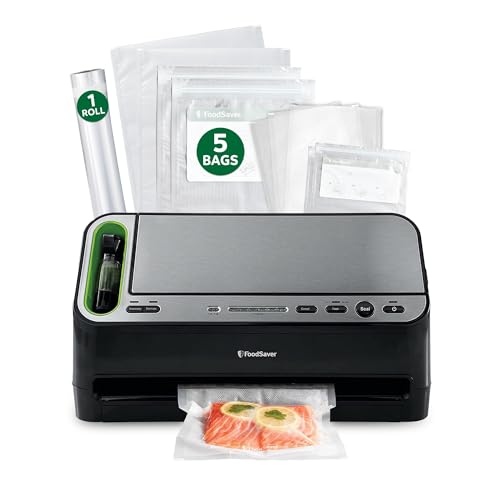
Every Sunday I roast a big batch of chicken thighs, portion them out, and vacuum seal them for the week. Same thing with garden tomatoes in August. Same thing with fish I catch in June. The FoodSaver V4400 2-in-1 has been running at least three times a week for the past six weeks, and it hasn't missed a seal yet.
If you're serious about cutting food waste, buying in bulk, or prepping meals ahead, a vacuum sealer earns its keep fast. The V4400 is FoodSaver's mid-tier model, sitting above the entry-level V2100 but below the countertop FM2000. It's the machine most serious home cooks land on, and for good reason.
Quick verdict
The FoodSaver V4400 2-in-1 is the best mid-range vacuum sealer you can buy right now. It handles bags and zipper bags, seals consistently on both dry and moist foods, and the automatic bag detection removes the one learning curve that turns people off from vacuum sealing. The five-year warranty backs up a durable machine. Skip it only if you need handheld portability or want to spend $80 less on the FM2000.
Who is this for?
The V4400 fits three types of buyers. First, bulk buyers — you shop Costco or Sam's Club and need to portion and seal meat, cheese, or produce before it goes south. Second, meal preppers — you cook on Sunday and want portions to hold in the fridge for a week or in the freezer for months. Third, gardeners and hunters — you have a short window to preserve a large harvest or catch, and you need speed and reliability. If you seal two bags a week, you'll wonder why you waited. If you seal twenty, you'll wonder how you cooked without one.
Key features
Automatic bag detection
Drop a bag into the chamber, close the lid, and the machine detects the bag, pulls the air, and seals — no buttons to hold, no timing to guess. This sounds small but it removes the most common point of failure in cheaper models where you push the wrong button or release too early and get a half-sealed bag. LED indicators on the front panel light up to guide you through dry mode, moist mode, and pulse mode. If there's moisture in the bag, the V4400 switches automatically.
Built-in roll storage and cutter
The V4400 has a compartment at the back that holds an 11-inch roll. Pull out what you need, cut to size with the built-in cutter, seal one edge, fill, and seal the other. No pre-bagged sizes to buy in advance. This saves money long-term — a 50-foot roll costs less per bag than buying individual quart and gallon bags. The cutter isn't sharp enough to feel flimsy, but it cuts cleanly every time.
Automatic moisture detection
This is the feature that separates the V4400 from the V2100. When you're sealing something wet — marinated chicken, soup, fresh produce with surface moisture — the machine senses liquid and switches from standard to gentle mode so it doesn't pull liquid into the seal bar. You'll get fewer failed seals on moist foods as a result. It matters most when you're sealing leftovers straight from the pan or produce you just washed.
Removable drip tray
The patented drip tray sits under the seal bar and catches any liquid that gets sucked out during the vacuum cycle. It's removable and dishwasher safe, which makes cleanup straightforward. If you've ever used a vacuum sealer without one, you know that liquid overflow makes a mess on the counter and can compromise the seal. The tray solves that.
Versatility with zipper bags and accessories
The 2-in-1 designation means this model works with standard vacuum bags and zipper bags, which FoodSaver calls FreshZip. That matters for produce, berries, and soft items that don't need full vacuum pressure but benefit from the zipper closure keeping air out. The V4400 also works with FoodSaver containers, the Quick Marinator, and mason jar sealers. If you want to expand into sealing liquids or marinades, the ecosystem is there.
Real-world performance
Sealing a whole chicken breast took 28 seconds from dropping the bag in to a finished sealed pack. That's with a quarter-gallon bag, the most common size for individual portions. On the dry setting, the seal held when I tugged hard. On moist mode — I tested with marinated pork tenderloin — it pulled vacuum without sucking liquid into the seal bar and produced a clean, tight seal.
The built-in roll cutter is where efficiency wins. I cut a custom bag for six chicken thighs, sealed one end, stuffed the thighs in, sealed the other end. Four bags total in under five minutes including cleanup. Doing that with pre-cut bags would have required six individual bags at three times the per-bag cost.
For garden tomatoes in August, I sliced and sealed two layers per bag with a paper towel between them to prevent crushing. They went in the freezer and three months later, when I pulled them out to make sauce, the seal was intact, the tomatoes were freezer-burn free, and the flavor held. That's the FoodSaver system's promise in action — up to three years in the freezer without degradation.
The LED indicators take the guesswork out. Green means ready, orange means vacuuming, and an illuminated lock icon tells you the seal is complete. If you hand this to someone who's never used it, they figure it out in two bags.
Pros and cons
The structured pros and cons are in the right rail. One tradeoff worth naming: the V4400 is bulky. It sits flat on a counter but takes up roughly 18 by 10 inches of counter space and weighs over 9 pounds. If your kitchen is tight, that's a real consideration. It also requires bags and rolls, which are an ongoing cost — budget roughly $15–20 every few months depending on usage.
Verdict & price check
The FoodSaver V4400 2-in-1 earns its position as the default mid-range vacuum sealer recommendation. Automatic bag detection, moisture sensing, and built-in roll storage are features you'll use every time, not gimmicks that gather dust. The five-year warranty signals FoodSaver's confidence in the build quality. If you buy in bulk, cook ahead, or preserve seasonal produce, this machine pays back fast. Check the current Amazon price for the FoodSaver V4400 2-in-1.