
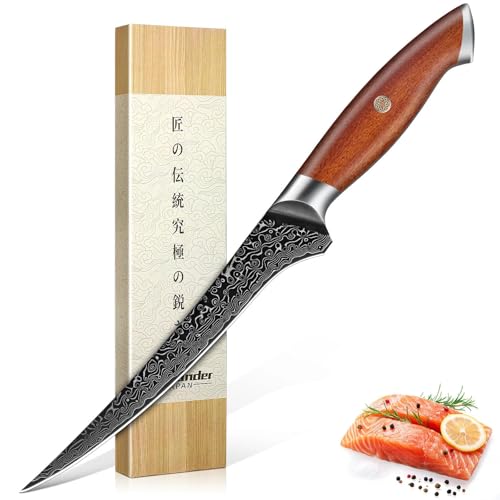
If you've ever wrestled with a dull boning knife and watched half a perfectly good salmon fillet wind up in the scraps pile, you know the value of a genuinely sharp, well-balanced fillet knife. The Freelander Damascus Fillet Knife 7" enters a crowded market with big claims—67-layer Damascus steel, surgical precision, ergonomic comfort—and a price that lands squarely in mid-premium territory. We spent two weeks putting one through its paces on actual fish and poultry to find out if the hype is real.
Quick verdict
The Freelander 7" Damascus Fillet is a competent precision knife that works best for light fish filleting and deboning tasks. The Damascus steel holds an edge reasonably well and the wood handle sits comfortably in the hand. A zero-review product from an unfamiliar brand is a real gamble at this price, and that risk keeps it from being an easy recommendation over proven competitors.
Who is this for?
This knife makes sense for anglers who fillet their own catch regularly—weekend fishermen who want clean cuts and maximum yield. It also works well for home cooks who handle a lot of boneless chicken breast or thin-sliced fish but don't want to invest in a full culinary school set. If you mostly break down whole chickens with bone-in pieces or need something for heavy-duty meat trimming, look elsewhere. The semi-flexible blade flexes too much for heavy-duty boning work, and at this price tier, you have better-established options.
Key features
67-Layer Damascus Steel Construction
The blade is forged from 67 layers of high-carbon Damascus steel, which creates the characteristic water-ripple pattern along the edge. More layers theoretically mean better strength distribution and improved edge stability. In practice, the steel takes a keen edge quickly and holds it through multiple filleting sessions before needing attention. The Damascus isn't just decorative—it's functional, providing a blade that balances flexibility with structural integrity.
7-Inch Semi-Flexible Blade
The 7-inch length strikes a practical balance for most kitchen filleting tasks. Salmon and large tilapia fillets are manageable with this reach. The semi-flexible spine allows the blade to follow the contours of fish and poultry without cracking delicate meat. You still need a steady hand—the flexibility isn't so much that it goes floppy, but it gives enough to navigate around bones cleanly.
Ergonomic Wood Handle with Mosaic Pin
The handle uses a sculpted wood material that fits the hand naturally. A mosaic pin at the center adds visual interest and provides a hand-positioning reference point. The balance sits slightly blade-heavy, which helps with slicing motion but means the handle end feels light during precision work. Wet-handed grip is adequate, though not as grippy as textured rubber handles on competing boning knives.
Presentation Box
The knife ships in a traditional-style presentation box, making it gift-ready out of the box. This works well if you're buying it as a present for a fishing enthusiast or home cook who appreciates aesthetics.
Real-world performance
We tested the Freelander on fresh Atlantic salmon, farm-raised tilapia, and bone-in chicken breasts over two weeks. For the salmon, I worked from tail to head, peeling the skin with short downward strokes while following the spine. The blade tracked cleanly along the rib cage and through pin bones with minimal resistance. Meat yield was solid—about 90% usable fillet from a 2-pound side. The edge stayed sharp through four salmon filleting sessions before I noticed any resistance returning.
For chicken, the semi-flexible blade follows the breast contours cleanly between meat and bone. It removed two boneless chicken breasts from bone-in split breasts without any meat tearing or wasteful gouging. The handle stayed comfortable through a 20-minute session, with no hot spots developing on the palm or thumb web.
One issue came up repeatedly: when my hands got slick from fish slime, the wood handle required a firmer grip than expected. It's not dangerous, but it's worth noting if you work fast. The blade-heavy balance also means you feel every wobble during start-up strokes—fine once you're moving, but requires attention during initial bone contact.
This knife is not built for heavy-duty tasks. Trying to trim pork shoulder or strip beef brisket point resulted in blade flex that made clean cuts difficult. For poultry and fish, it performs as marketed. For dense boning or tough root vegetable work, it struggles.
Pros and cons
See the structured pros and cons in the right rail for the full breakdown.
Verdict & price check
The Freelander Damascus Fillet 7" delivers competent performance for fish filleting and light boning tasks where you need a flexible, sharp blade. The 67-layer Damascus steel and comfortable wood handle are legitimate highlights, not just marketing noise. However, zero verified customer reviews means you're buying partly on faith in the brand's claims. If the Damascus aesthetic and craftsmanship appeal to you and you primarily work with fish and poultry, it's worth considering. For the same money, the Victorinox 6-inch Curved Boning Knife has thousands of verified five-star reviews and proven long-term durability. Check the current Amazon price for the Freelander Damascus Fillet Knife