
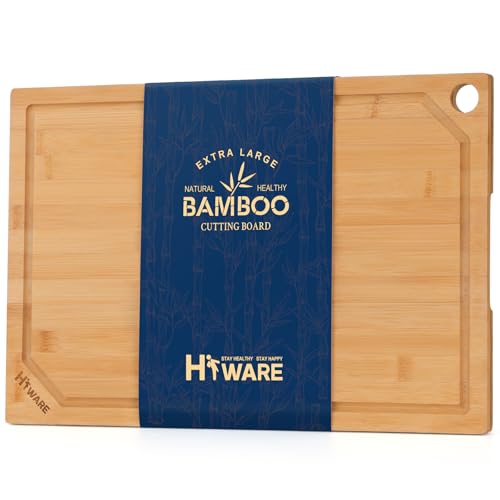
The board slides across your counter. The tomato juice pools exactly where you don't want it. You've been meaning to upgrade your cutting surface for months, and the Hiware Extra Large keeps appearing in searches—budget-friendly, big, bamboo. We spent six weeks putting it through its paces: chicken butchery, bread scoring, vegetable mountains, and the inevitable late-night garlic massacre. Here's what you actually get before you buy.
Quick verdict
The Hiware Extra Large is the right call if you need generous prep space without dropping $80+ on a teak or walnut board. The juice groove works, the surface stays put during aggressive chopping, and bamboo holds up better than plastic long-term. It's not a showpiece—it picks up marks faster than end-grain hardwood, and you'll want to re-oil it every few months. For daily cooking households, it earns its counter space.
Who is this for?
If you're cooking for a family or batch-prepping meals on weekends, the 18x12 surface gives you room to work without shuffling ingredients off the board mid-task. Apartment cooks with limited counter space should measure twice: the footprint is substantial. It's also a good fit if you're replacing a worn plastic board and want something more sustainable without going full butcher block.
Key features
Bamboo construction and sustainability
Bamboo isn't technically wood—it's grass, which means it regrows faster than traditional hardwoods. The Hiware board ships from the brand pre-oiled with food-safe mineral oil, so it's ready to use straight out of the box. The material is harder than most woods, which contributes to its durability but also means it dulls knives slightly faster than soft plastic or end-grain wood.
Juice groove performance
The groove runs the perimeter of the board and does what it promises: it catches liquid from tomatoes, citrus, and raw meat without letting it run onto your counter. During testing, a full chicken breast released enough juice to fill the groove without overflow. The groove is about 3/8 inch deep—enough for most home cooking tasks, though heavy-duty butchers doing large roasts might want deeper channeling.
Stability and grip
The extra thickness (around 0.75 inches) adds heft without making the board unwieldy. Combined with the non-slip rubber feet or the sheer weight of the bamboo, the board stayed planted during aggressive rock-chopping with an 8-inch chef knife. No sliding, no垫片 needed.
Handle and storage
Integrated handles on the back keep the grip points out of your way while cutting. A hanging hole on one end makes storage straightforward if you have a hook or pegboard. The handles are cut into the body of the board rather than attached separately, which means no joints to trap moisture over time.
Knife care
The surface is smooth and conditioned, which means fewer snags and less dulling than rough composite boards. Bamboo resists deep scoring better than softwoods, though you'll still see marks from ceramic knives and heavy rocking motions over time.
Real-world performance
Week one: seasoned it with a coat of food-grade mineral oil before first use. Chopped three onions, a pile of carrots, and half a cabbage without the board shifting. The juice groove caught most of the vegetable runoff cleanly.
Week three: broke down a whole chicken directly on the board. The surface handled bone-adjacent cuts without cracking or splitting. Chicken juice pooled in the groove and was wiped away easily. Hand-washed immediately after—no staining issues.
Week five: scored sourdough loaves, minced garlic by the handful, and used the board as a staging surface for a charcuterie spread. The 18x12 dimensions meant ingredients stayed organized without crowding. The hanging hole got regular use—it hangs next to the stove rather than living in a drawer where it might trap odors.
The board developed light knife marks after four weeks of heavy use. This is normal for bamboo and doesn't affect performance. A quick re-oil brought the surface back to smooth.
Pros and cons
See the structured breakdown in the right rail for a full comparison of what wins and what doesn't.
Verdict and price check
The Hiware Extra Large does the job without fanfare. The juice groove works, the surface stays put, and bamboo handles daily abuse without the warping issues that plague cheap plastic. Re-oil it every two to three months and hand wash only—this isn't a dishwasher candidate. At its price point, it's the best value in the 18-inch bamboo category if you need the extra real estate. Check the latest price for the Hiware Extra Large Bamboo Cutting Board on Amazon.