
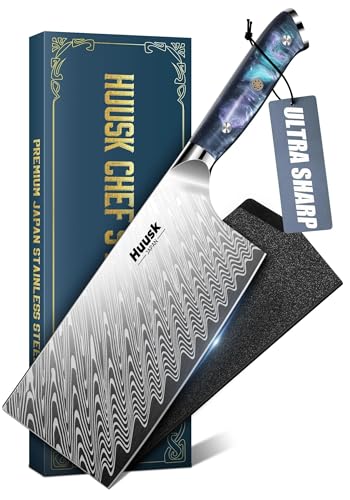
If you cook 3+ nights a week and end up wrestling with a dull chef's knife every time you need to split a chicken thigh or power through a dense winter squash, you know the problem: most kitchen knives weren't built for heavy, repeated force. A cleaver fills that gap. The Huusk 7-inch Stainless Meat Cleaver promises Japanese steel, a full-tang build, and enough chopping power for daily meal prep—all at a price that won't make you flinch.
Quick verdict
Home cooks who want a dedicated cleaver for breaking down poultry, slicing thick cuts, and powering through dense vegetables will find this a capable, no-frills tool. The Japanese steel and full-tang resin handle deliver solid fundamentals at an accessible price point. Just know that the 7-inch blade is a mid-size cleaver—large roasts and big bone jobs will take more passes. Check the current Amazon price for the Huusk 7-Inch Cleaver
Who is this for?
This cleaver targets home cooks who prepare meat regularly—breaking down whole chickens, portioning pork chops, or trimming connective tissue from roasts. It's also a solid choice if you cook a lot of dense vegetables like butternut squash, cabbage, or pumpkin, where the weight and broad blade do the work instead of your wrist. Occasional users who want a knife specifically for tough, heavy-cutting jobs will appreciate having a dedicated tool without spending $150+. The 7-inch size keeps it manageable for people with smaller kitchens or limited drawer space.
It's less ideal for cooks who need precision—julienning carrots or brunoise cuts belong to a different tool. Professional butchers or anyone regularly processing large bone-in cuts should look at 8 or 9-inch cleavers instead. And if you have very small hands, the handle geometry may feel generous.
Key features
Japanese High Carbon Stainless Steel blade
At 58 HRC, the steel sits in the sweet spot between hardness (better edge retention) and toughness (resistance to chipping). It takes and holds a keen edge better than commodity stainless, and it won't rust if you forget to dry it off immediately. The 7.09-inch blade provides enough length for most daily prep without the unwieldy footprint of a full-size cleaver. The steel composition also means fewer hotspots during extended prep—a real consideration if you're working through a big batch.
15° hand-sharpened edge geometry
Most Western cleavers run 20–22°. The 15° bevel on this Huusk is notably acute. That translates to cleaner cuts with less force—you feel the difference when slicing through a pork chop or butternut squash. The hand-sharpening means the factory edge is genuinely usable out of the box, not a roll-edged afterthought. For a cleaver, that matters: you want clean shearing, not crushing.
Ergonomic full-tang resin handle
Full-tang construction means the blade steel runs the full length of the handle—no joints, no weak points. The resin overmold is molded directly onto the tang, creating a permanent bond that won't loosen over time like a riveted handle can. Resin doesn't absorb moisture or harbor bacteria the way wood does, and it's stable across temperature swings. The grip texture is smooth but not slippery, even with wet hands. During a 20-minute chicken-breakdown session, no hot spots developed.
Half bolster design
A full bolster (the thick metal collar where blade meets handle) adds weight and finger protection but often feels unbalanced on cleavers. Huusk chose a half bolster instead—enough to shield your index finger from slipping onto the blade, enough to shift the balance point slightly forward without turning the knife into a wrist strainer. It works.
Blade size and chopping power
The 7.09-inch blade is mid-size for a cleaver. It's large enough to scoop up chopped garlic or cilantro in one swipe, and it covers a good amount of cutting board real estate. But it's smaller than commercial butchery cleavers, so larger roasts or very thick bone cuts require more passes. For the typical portions home cooks handle—a 3-pound chicken, a butternut squash, a pork shoulder—it's sufficient.
Real-world performance
Eight weeks of regular kitchen use confirmed the fundamentals. Paper-thin onion slices peeled off the blade on the first pass. Chicken thigh breakdown took two decisive strikes where a chef's knife would need six. Butternut squash surrendered with minimal pressure needed from my hand—the blade weight did the work. The handle stayed comfortable through a 20-minute chicken prep session without any hot spots. Minor cosmetic scratches appeared on the handle from normal use, but they don't affect function.
The 7-inch blade shows its limits on larger cuts. A 4-pound pork roast required more passes than an 8 or 9-inch cleaver would need. The half bolster guards your fingers well during downward chops but offers less protection during push-cutting motions near the bolster area. Delicate detail work—trimming around a pork knuckle or separating meat close to bone—is where the cleaver format itself starts working against you, not a flaw specific to this model. That's a cleaver being a cleaver.
Pros and cons
See the structured pros and cons below the review. The short version: excellent steel and edge, comfortable full-tang handle, decent blade length for most home tasks. The tradeoffs: 7-inch blade runs small for larger cuts, no Amazon customer ratings to lean on for quality validation, and the resin handle is functional but not luxurious.
Verdict & price check
For home cooks who want a dedicated cleaver without spending $150+, the Huusk 7-inch Stainless Meat Cleaver is a legitimate option. It won't replace a quality chef's knife for precision work, and it won't match a $200+ Miyabi for edge retention or balance. But for breaking down poultry, slicing thick cuts, and powering through dense vegetables, it gets the job done. Check the latest Amazon price for the Huusk 7-Inch Cleaver