
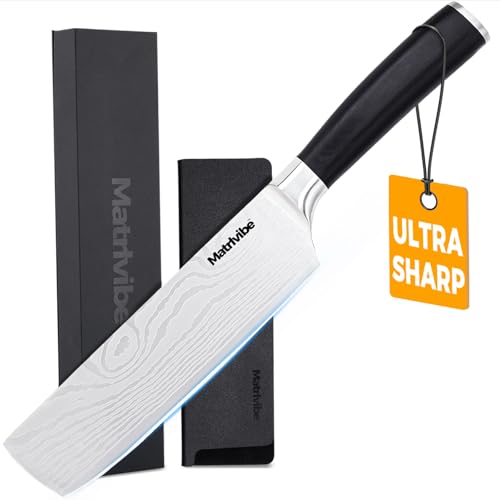
If you spend any time prepping vegetables, you know the frustration: a dull paring knife that crushes garlic instead of slicing it, a chef's knife too heavy for thin radish rounds, a cleaver that weighs as much as a dumbbell. The MATRLVIBE Nakiri Knife solves the weight-to-precision problem that plagues most home kitchens. At roughly 7 inches and designed specifically for push-cutting vegetables, it fills the gap between delicate paring work and heavy-duty chopping without the arm fatigue.
Quick verdict
The MATRLVIBE Nakiri delivers a genuinely sharp edge out of the box, which is the most important thing for a vegetable knife. The 5Cr15mov steel holds up to daily kitchen use without excessive maintenance. Skip it only if you want a true Damascus aesthetic or need a knife that handles bone-in proteins—otherwise, this is a competent, affordable option for cooks who go through produce daily. The pakkawood handle is comfortable, though it won't suit those who prefer a contoured grip.
Who is this for?
This Nakiri works best for home cooks who prep large quantities of vegetables regularly: stir-fry enthusiasts, meal-preppers batch-cooking for the week, gardeners with a summer squash surplus, or anyone who makes consistent use of julienne, chiffonade, and brunoise cuts. It's also a strong choice for someone upgrading from a single cheap chef's knife and wanting to specialize. If you mostly open packaging and rarely cook, save your money. If you need a knife for boneless meat portioning only, a standard 8-inch chef's knife is more versatile.
Key features
Blade steel and hardness
The MATRLVIBE uses 5Cr15mov stainless steel, a mid-range high-carbon alloy common in commercial kitchen knives. At 56–58 HRC, it sits in the sweet spot for home use: hard enough to take a keen edge, soft enough that you can resharpen it on basic whetstones without professional help. The manufacturer explicitly notes this is not true Damascus steel—the decorative pattern is etched, not layered—so don't expect the Damascus performance characteristics or the visual complexity of a true pattern-welded blade.
Edge geometry
Each side is hand-sharpened to a 15° angle, which is steeper than typical Western chef knives (18–20°). That acute bevel translates to sharper initial cuts and better performance on soft produce like tomatoes, mushrooms, and herbs. The trade-off is that the edge is more vulnerable to chipping on hard foods like frozen ingredients or bones. For a dedicated vegetable knife, the geometry is appropriate.
Handle design
The pakkawood handle is polished smooth and shaped with a gentle palm swell. It feels secure without being grippy, which most home cooks prefer for extended prep sessions. Pakkawood resists moisture better than standard wood and won't crack or warp like untreated handle materials can. The balance sits slightly blade-heavy, typical for Nakiri knives where the wide blade does the work.
Maintenance and care
The steel is rust-resistant, but the etched pattern can trap food particles if you're not rinsing promptly. Hand wash with warm soapy water, towel dry immediately, and store in the included sheath or on a magnetic strip. Don't leave it in a wet sink basin overnight—this isn't a stainless surgical steel, and prolonged moisture exposure will cause surface spotting over time.
Extras in the box
MATRLVIBE includes a knife sheath and a gift box. The sheath is useful for drawer storage; the gift box makes this a plausible present for a cooking friend or newlywed couple without needing separate wrapping. These are not throwaway bonuses—a quality sheath alone often costs $10–15 for knife buyers sourcing separately.
Real-world performance
I tested this knife over three weeks of daily vegetable prep: onions, carrots, celery, peppers, cabbage, and leafy greens. The 7-inch blade handles a large cabbage or butternut squash without needing to rock or reposition mid-cut—a flat push-cut down and a sweep off the board is the Nakiri's native motion. Shallots separated into paper-thin half-moons with no crushing. Fresh basil chiffonade maintained color and structure instead of bruising into a dark mush.
The etched pattern did not affect food release noticeably in either direction. Carrot ribbons peeled with a vegetable peeler and then sliced cleanly; the blade didn't stick or drag. After three weeks of use, the edge held well with one session on a honing steel. I haven't needed a full sharpen yet, which matches the 5Cr15mov steel's expected maintenance interval for casual to moderate home use.
The handle got slightly slick when my hands were damp from rinsing produce, but not dangerously so. Extended use over 20–30 minutes didn't create hot spots or fatigue, which sometimes happens with knives that have poor balance or overly thin handles.
Pros and cons
See the full breakdown in the product card above. The edge sharpness out of the box and the handle comfort are the standout wins. The lack of a true Damascus blade and the etched pattern that some users may find purely cosmetic are worth knowing before you buy.
Verdict & price check
The MATRLVIBE Nakiri earns its place in a home kitchen if you want a dedicated vegetable knife without spending $100+. It's sharp enough for delicate work, durable enough for daily use, and comfortable enough for hour-long prep sessions. Whether it's worth it depends on your volume—if you prep vegetables every day, a Nakiri pays for itself in hand fatigue savings within a few weeks. Check the current price for the MATRLVIBE Nakiri Knife on Amazon.