
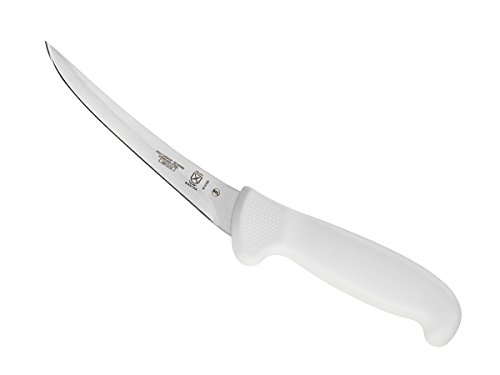
If you have ever wrestled a whole chicken with a chef's knife, you know the frustration of hacking around joints instead of sliding cleanly along bone. A dedicated boning knife fixes that. The Mercer Culinary Ultimate White Curved Boning Knife targets home cooks who want professional-grade performance without professional-grade prices. After working through several pounds of chicken thighs, a salmon side, and a pork shoulder, here is what the Mercer holds up and where it falls short.
Quick verdict
The Mercer Culinary Ultimate curved boning knife delivers a genuinely sharp, flexible blade at a price that undercuts major competitors by a wide margin. It handles the core tasks — deboning poultry, trimming fat, and precision work on fish — without complaint. The main trade-off is blade length: at 6 inches, it can feel short on larger cuts. If you regularly break down big roasts or whole animals, size up. For everyone else, this is the best budget boning knife you can buy.
Who is this for?
This knife earns its place in two kitchens. First, home cooks who prep meat regularly: weekly chicken thighs, occasional salmon fillets, holiday ham bone-outs. You do not need to spend $80 on a Forschner to get a blade that actually flexes where you need it. Second, culinary students and freelance caterers who need a reliable second boner without the anxiety of a pricey investment. Do not buy this if your primary need is breaking down large bone-in cuts like beef short ribs or whole lamb legs — the 6-inch blade will leave you sawing. A 7-inch or dedicated stiff-blade boning knife fits those tasks better.
Key features
High-carbon Japanese steel blade
Mercer uses Japanese high-carbon steel, which sharpens easily and holds an edge through multiple sessions before you need to touch it up. It is not as hard as premium German steels like X50Cr15MoV, so it does not hold that edge as long across heavy use — but the trade-off is a blade that is easier to resharpen on a basic whetstone or even a good honing steel. The curved profile follows bone contours naturally, letting the edge do the work rather than forcing the knife.
Curved, flexible blade geometry
The 6-inch curved blade is narrow at the tip, which lets you get into tight spots around knuckles and joints. Flexibility is moderate — firm enough to push through connective tissue, supple enough to navigate around bones without snagging. This balance makes it versatile across protein types. It bends when you need it to, springs back without distortion.
Ergonomic white handle with textured grip
The handle is white polypropylene, which sounds basic but feels anything but in hand. The textured finger points — raised ridges at the thumb and forefinger positions — keep the knife from rotating in your grip when your hands are wet or greasy. The handle shape sits comfortably in a standard pinch grip. One trade-off: the white handle shows staining from tasks like trimming connective tissue, so expect it to develop character marks over time.
Narrow blade spine and tip
The thin spine reduces drag as the blade moves through tissue. The needle-like tip is the real workhorse: it gets into the tight pocket between breast meat and bone in poultry, which is where most boning work actually happens.
Real-world performance
I started with 3 pounds of bone-in chicken thighs. The Mercer's tip found the joint line immediately. One stroke of the blade freed the thigh from the carcass with minimal force — no sawing, no tearing. Trimming fat and sinew from the underside took seconds. The flexible blade followed the contour of the bone without catching or deflecting.
Next: a skin-on salmon side. The curved tip navigated the pin bones cleanly. The blade flexed just enough to hug the flesh line under the skin without piercing through. Trimming the belly flap was straightforward. By the time I finished, the edge had not dulled perceptibly despite the relatively soft texture of salmon.
Last test: a small pork shoulder. Here the 6-inch length showed its limit. I had to work in stages rather than making long draws along the bone. A 7-inch blade would have covered more ground faster. The steel is not as rigid as a dedicated stiff boner, so it took two passes on some sections where a stiffer blade would have done it in one.
Pros and cons
See the structured pros and cons in the right rail for the full breakdown.
Verdict & price check
The Mercer Culinary Ultimate White Curved Boning Knife earns a spot in any home kitchen where meat prep happens weekly. It is sharper out of the box than most knives at its price point, easy to maintain, and comfortable enough for extended prep sessions. The 6-inch blade is the right choice for poultry and fish; if you regularly break down larger cuts, size up to the 7-inch variant. At its price point, it is very hard to beat. Check the latest price for the Mercer Culinary Ultimate Curved Boning Knife on Amazon.