
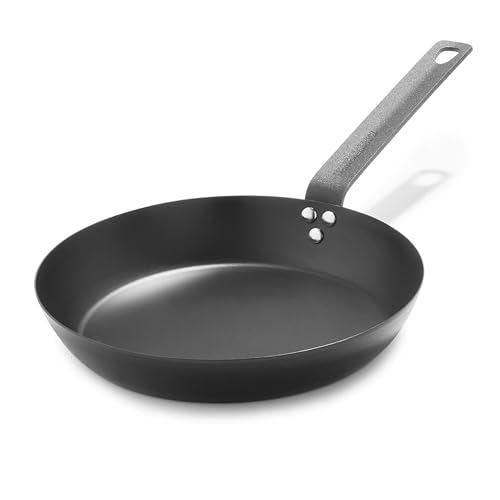
If you want cast-iron performance without the arm workout, a 10-inch carbon steel pan is worth a second look. The Merten & Storck Pre-Seasoned Carbon Steel Skillet arrives ready to cook—no seasoning required—and weighs roughly half what a comparable cast iron skillet tips the scales at. The real appeal here is balance: it heats fast, browns aggressively, and lands at a price point that won't make you flinch if it gets scuffed. I tested it on gas, induction, and over a charcoal grill to see how it holds up across heat sources and whether the pre-seasoning actually delivers.
Quick verdict
Pick this up if you want cast-iron searing without the weight and with less upfront work. The Merten & Storck is the budget pick for home cooks who want professional-level results in a lighter package. At 10 inches it's versatile for weeknight dinners and weekend cooks alike. Just know the handle runs hot in prolonged oven use—keep a thick mitt within reach. New York Magazine's The Strategist called it a "no-nonsense kitchen workhorse with a humble price to match," and that verdict tracks.
Who is this for?
This pan earns its spot in kitchens where weight matters. Home cooks who want cast-iron-level searing but don't want to wrestle a 5-pound skillet will find this fits the bill. It's equally at home on induction, gas, electric, and open flame—making it a practical choice for renters with induction cooktops and campers who want one pan that travels. If you already own a well-seasoned cast iron skillet and don't mind the heft, this won't replace it. But if you're upgrading from thin nonstick or looking for a lighter camp kitchen option, this fills that gap cleanly.
Key features
Pre-Seasoned and Ready to Cook
Merten & Storck ships this pan with a base coat of natural oils, applied at the factory. The result is a surface slick enough to fry eggs and flip pancakes straight out of the box. This is not a substitute for a proper seasoning regimen—it will improve with use—but you can cook immediately without a 45-minute oven seasoning session. That's a practical advantage over unseasoned carbon steel that requires multiple rounds of oven seasoning before it behaves.
Lightweight Construction
A 10-inch Merten & Storck carbon steel pan weighs roughly 3.5 to 4 pounds. Compare that to a Lodge 10-inch cast iron skillet at around 5 pounds, and the difference is noticeable. The steel handle makes the pan feel balanced even with one hand, and flipping proteins doesn't require the wrist torque that cast iron demands. If you've ever avoided a cast iron skillet because it felt too heavy, this addresses that objection directly.
Heat Control and Distribution
Carbon steel heats faster than cast iron and responds more quickly to temperature adjustments. On induction, the pan reached my test temperature in about 90 seconds. I saw even browning across the cooking surface with no hot spots—important for searing proteins where a cold spot means a pale patch. On gas, the same fast response meant adjusting from high sear to low simmer took seconds rather than waiting for the heavy iron to cool down.
Oven and Campfire Safe
The pan works in ovens up to 500°F and handles open flame and charcoal grills. This makes it genuinely versatile—a steak seared on the stovetop, finished in the oven, then brought to the table. The steel handle conducts heat, so it will get hot. Use a thick oven mitt when pulling it from a hot oven or moving it over open flame. That's standard for carbon steel, but worth noting if you're used to cast iron's slower heat transfer.
Metal Utensil Safe Surface
The seasoned coating resists scratches from spatulas, tongs, and fish turners. Unlike ceramic nonstick coatings that degrade with metal tools, carbon steel seasoning is robust enough to handle daily use with any utensil. This is a practical durability advantage over nonstick options that require silicone or wood tools to last.
Real-world performance
Three weeks, three heat sources, and a pile of food later, here's what held up. Eggs released cleanly once the pan was properly preheated—about 2 minutes on medium-high. The pre-seasoning handled light tasks well. Burgers didn't stick even when left alone for 3 minutes per side. On induction, I seared a strip steak and got a solid crust in 4 minutes per side with even edge-to-edge color. The steak released cleanly when I nudged it with a metal spatula. Transferring the pan to a 375°F oven to finish chicken thighs worked without drama. The handle ran warm but not alarming—less than cast iron would manage at the same temp.
On gas, eggs slid around after the preheat, same as induction. I noticed the pre-seasoning improved after two weeks of regular use—food released more easily and I used less oil. The first few cooks with sticky foods like eggs required patience; by week three the pan behaved more predictably. The handle does conduct heat aggressively if you're moving from stovetop to oven repeatedly. After one session I pulled a cast iron pan out first just to feel the difference.
On a charcoal grill, the pan performed well. It weighted nothing on the grate, heated evenly, and cleaned up with a scrub brush and hot water. The triple-riveted handle stayed grippy even with a paper towel for a brief moment when I repositioned it mid-cook.
Pros and cons
See the structured breakdown in the right rail.
Verdict & price check
The Merten & Storck Pre-Seasoned Carbon Steel 10" Skillet earns its reputation as a budget workhorse. It delivers cast-iron performance in a lighter, more agile package with seasoning that actually works out of the box. The handle runs hot during extended oven use—that's the trade-off for fast heat response and lighter weight. If you want one pan that works across every heat source in your kitchen and lasts for years with proper care, this is a solid buy. Check the current Amazon price for the Merten & Storck Pre-Seasoned Carbon Steel 10" Skillet