
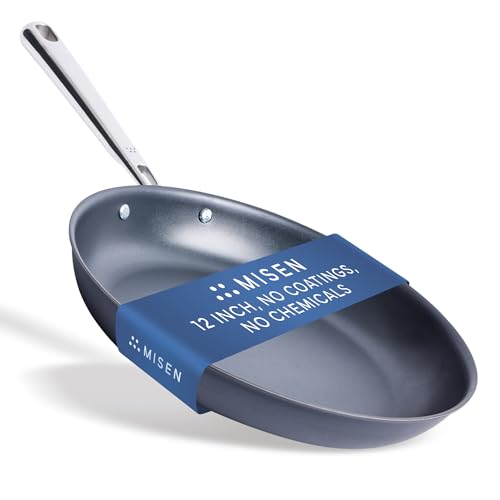
If you have ever peeled a layer of flaking coating off your pancake skillet and wondered what you were actually eating, the Misen Carbon Nonstick skillet is designed to make that feeling obsolete. Standard nonstick pans surrender their coating within six months of regular use. The Misen instead builds a natural patina that gets slicker the more you cook with it. We spent six weeks with the 12-inch model to find out if it actually delivers.
Quick verdict
The Misen Carbon Nonstick skillet sits at the intersection of nonstick convenience and serious heat performance. Eggs glide off without oil, steaks sear at temperatures that would ruin a Teflon pan, and metal spatulas do not faze it. The trade-off is seasoning maintenance similar to cast iron, and the price puts it firmly in premium territory. If you are done replacing nonstick pans every year, this is worth the upfront cost.
Who is this for?
This skillet earns a place in kitchens where nonstick gets used daily andCast Iron sees too much storage time. Weekend brunch hosts who make omelets without friction will appreciate the release. Home cooks who sear thick-cut steaks or chicken thighs in a screaming hot pan will notice the difference from Teflon immediately. If you treat your cookware gently, stick to low heat, and replace pans without complaint, a cheaper nonstick still works. But if you want one skillet that does eggs in the morning and a cast-iron sear at night, this fits.
Key features
Nitrided carbon steel construction
Misen crafts this skillet from carbon steel that has been nitrided—a heat treatment process that hardens the surface at a molecular level. Unlike coated nonstick, there is no layer to scratch or peel. The surface instead forms a natural patina over time, much like a well-seasoned cast iron pan. Cooking fats polymerize into the surface, making it progressively slicker with each use.
Chemical-free cooking surface
The pan is 100% free of PFOA, PTFE, and PFAS. Those compounds break down under high heat and are the reason conventional nonstick degrades over time. Misen markets this as a healthier sear, and the surface genuinely behaves differently from standard nonstick once the patina builds. It does not offer the same instant slipperiness out of the box as PTFE, but it reaches comparable release after a few cooking sessions.
Integrated aluminum core
Misen bonds an aluminum core between the carbon steel layers. This eliminates the hot spots common in traditional carbon steel and cast iron. The company claims it heats five times faster than cast iron. In practice, the pan responds quickly when you adjust the flame, giving you real control for tasks like building a pan sauce after a sear or cooking delicate fish at controlled medium heat.
1100°F heat rating
Standard nonstick fails around 500°F. The Misen thrives up to 1100°F, which means you can actually sear properly without worrying about damaging the coating. It works on induction, gas, electric, and in the oven. Misen also claims it survives open flame on the grill, though most home cooks will use this primarily on the stovetop.
Real-world performance
We started the six-week test by cooking eggs—no oil, cold start, just crack and go. The first attempt stuck slightly. By the third cook, the eggs released cleanly and slid across the surface with minimal resistance. The patina was building as promised.
Steaks told the real story. A 1.5-inch bone-in ribeye went into a ripping hot gas burner for a hard sear. The crust developed in under two minutes per side. No coating smell, no discoloration, no flaking. The same task destroys nonstick in short order. The aluminum core distributed heat evenly across the 12-inch surface, which matters for larger cuts that need consistent browning from edge to edge.
Pan sauces came together quickly after the sear. The fast heat response meant adjusting from high to medium in seconds without the lag typical of thick cast iron. Scrambled eggs with a rubber spatula felt natural—the metal utensil scraped without leaving a mark.
The seasoning learning curve exists. Early cooks required more fat than a seasoned cast iron pan would. The nitrided surface is harder than raw carbon steel, so the patina takes longer to stabilize. After two weeks of regular use, the surface behaved like a well-seasoned carbon steel pan—quick release, easy cleanup, no sticking on proteins or delicate foods.
Pros and cons
See the structured pros and cons in the right rail.
Verdict and price check
The Misen Carbon Nonstick skillet rewards cooks who want high-heat performance without the fragility of Teflon. It does not match the instant slipperiness of PTFE pans out of the box, but the patina that develops after a handful of cooks brings release quality on par with—and eventually beyond—standard nonstick. The metal-utensil safety and 1100°F rating make it practical for daily eggs and serious weeknight searing alike. If you want one skillet that handles both ends of the spectrum without replacement cycles, check the latest price for the Misen Carbon Nonstick 12-Inch on Amazon.