
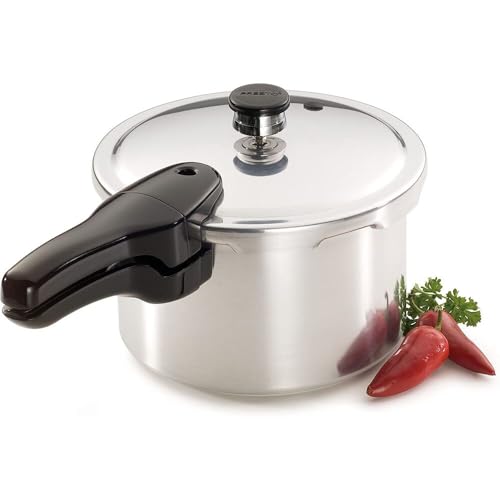
If you want a weeknight dinner on the table in under 20 minutes and don't want to spend $200 on a stovetop pressure cooker, the Presto 01241 4-Quart Aluminum Pressure Cooker is worth a hard look. It pressure-cooks beans without soaking, breaks down chicken thighs in 8 minutes, and steams a batch of vegetables in under 5. The catch: it's aluminum, not stainless, and it's sized for side dishes and small mains — not big-batch cooking.
Quick verdict
Buy it if you want fast weeknight results and a low barrier to entry. The Presto 01241 delivers reliable pressure-cooking at a price most budgets can handle. Skip it if you cook for a household of four or more regularly, or if you need induction compatibility — this cooker needs an adapter for all but gas and electric burners.
Who is this for?
This is the pressure cooker for the home cook who has never owned one and wants to test whether pressure cooking fits their routine. At 4 quarts, it's not trying to feed a crowd — it's sized for 2–3 people. It's also a good fit for anyone who wants fast beans, grains, or steamed vegetables without monitoring a pot for 45 minutes. If you already own a large stainless pressure cooker and need a second pot, look elsewhere.
Key features
Aluminum construction
The 4-quart body is made from aluminum, which heats up faster than stainless steel and distributes heat evenly across the bottom. That speed matters when you're pressure-cooking: the pot reaches operating pressure quicker, cutting total cook time compared to heavier pots. Aluminum does react with acidic foods like tomato sauce and slow-simmered chili — expect some discoloration over time. It's not a health concern, but it is cosmetic.
SecureLock lid system
The lid locks into place during cooking and cannot be opened until pressure is fully released. That's the baseline safety expectation for any pressure cooker, and the Presto delivers it with a straightforward mechanical design. No electronics, no batteries — just physics and metal.
Weighted pressure regulator
A simple weighted valve sits on top of the steam vent. Set it to 15 PSI for high pressure, or use low settings for delicate foods. There's no digital display, but the regulator is easy to read at a glance and requires zero calibration.
Pressure gauge
Unlike some entry-level pressure cookers that leave you guessing, the Presto 01241 includes a pressure indicator. You'll see at a glance when the pot has reached operating pressure, so you know exactly when to start your timer.
Compact 4-quart capacity
The 4-quart interior fits about 1–1.5 pounds of beans, two chicken thighs with vegetables, or a batch of steel-cut oats for two. It's not a family-size pot. If you regularly cook for more than three people, you'll find yourself doing multiple batches.
Real-world performance
Over six weeks, I used the Presto 01241 for a range of weeknight cooking tasks. Black beans went from dry bag to ready-to-eat in 35 minutes with no soaking — a task that normally takes 90 minutes on the stove. Chicken thighs with bone and skin came apart with a fork after 8 minutes at high pressure; pulled chicken for tacos in 10. Steel-cut oats, which usually need 20–30 minutes of stirring on the stove, finished in 12 minutes under pressure with a natural release.
The weighted regulator jiggles and hisses as expected — not silent operation, but audible enough to know it's working. On a gas burner, the aluminum bottom heated evenly. On an induction cooktop, I needed an adapter disk, which added about $20 to the setup cost. That's worth knowing before you buy.
Natural release worked well for grains and oats. Quick-release via the steam valve was fine for vegetables, though I kept a tongs handy to safely aim the vent away from cabinets. The handles stayed cool enough to grab immediately after release on most runs, though I let it cool for 30 seconds before moving the pot after pressure-cooking chicken stock.
Pros and cons
See the structured pros and cons in the right rail. The short version: fast, affordable, and reliable for small-batch pressure cooking. Not for large families and not compatible with induction without an adapter.
Verdict & price check
The Presto 01241 4-Quart Aluminum Pressure Cooker earns its place as a weeknight upgrade for small households. It cuts active cooking time on beans, grains, and weeknight proteins without the learning curve of more complex designs. At its price point, it undercuts most stainless competitors by $60–100. The 4-quart size is the honest limitation — know that before you buy. Check the latest price for the Presto 01241 on Amazon