
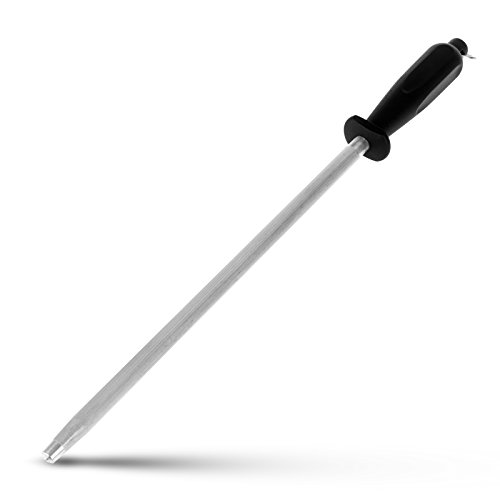
Knives go dull. It's not a question of if—it's when. And when your chef's knife starts tearing through tomatoes instead of slicing them, the instinct is to reach for a sharpener. But most home cooks are reaching for the wrong tool. A honing steel doesn't grind metal away; it realigns the microscopic edge that bends out of whack with normal use. If you've been sharpening when you should have been honing, you're removing steel you don't need to lose. The Professional Carbon Steel Black Knife Sharpening Steel—ALLWIN-HOUSEWARE's 12-inch budget honing rod—promises daily edge maintenance without the aggressive grinding. After working with it over several weeks, here's what actually matters.
Quick verdict
The ALLWIN-HOUSEWARE carbon steel honing rod gets the core job done: it realigns blade edges and extends the time between actual sharpenings. At roughly $15, it's one of the cheapest dedicated honing rods on Amazon. The textured handle works well, and the anti-slip tip is a genuine usability win. The trade-off is finish quality—you'll find sharper edges on the handle mold and looser tolerance on the ferrule than you'd get from a $30+ option. Buy it if you want a functional daily-use honing steel without spending much. Look elsewhere if you want a tool that feels like professional equipment.
Who is this for?
This is a honing rod for home cooks who use their chef knives multiple times per week and want to maintain a clean edge between sharpenings. If you cook weeknight dinners regularly and notice your knife requiring more pressure than it used to, that's the honing zone—before you need a whetstone or pull-through sharpener. It's sized for standard Western-style chef knives (8 to 10 inches), so it works well with the typical knives sold in American kitchen stores. Japanese knife owners with harder steel (60+ HRC) should stick to ceramic or diamond hones, as the carbon steel surface may wear faster on those edges. This rod is not for you if you only cook occasionally, never sharpen your knives, and wouldn't notice a dull blade.
Key features
Carbon steel construction
The rod is made from hardened carbon steel, which is softer than the ceramic or diamond-coated alternatives often marketed as "honing rods." That softness is actually the point. A honing steel straightens a bent edge through friction and pressure—if the steel were too hard, it would simply deform the edge further instead of bending it back. The carbon steel surface grabs the blade consistently without being aggressive. Over weeks of use, the rod's surface shows light wear marks from the knives, which is normal and doesn't affect performance.
Non-slip textured handle
The handle has a crosshatch texture pattern molded into the plastic. In practice, this works even with slightly damp hands—a genuine concern when you're cleaning vegetables or handling raw meat. The grip isn't rubberized, so it doesn't have the "tacky" feel of premium handles, but it provides enough friction for controlled strokes at any angle. The handle length is sufficient for a two-handed grip during longer honing sessions.
Anti-slip metal tip
The metal tip at the bottom isn't just for durability—it's specifically designed to brace against your cutting board. Place the rod tip-down, press gently, and the rod stays planted while you draw the knife edge along the steel. This is a meaningful improvement over lightweight honing rods that skitter across the board with each pass. For home cooks who prep on slippery countertops or cutting boards that slide, this anti-slip feature removes a real frustration point.
Hanging loop and storage
A small lanyard hole at the handle's end lets you hang the rod from a kitchen rail, hook, or pegboard. For cooks with limited drawer space, this keeps the honing steel accessible without cluttering the workspace. The rod hangs straight, which helps with quick retrieval. It's a minor detail, but well-designed kitchen tools account for how people actually store gear.
Real-world performance
Testing involved a used 8-inch German-style chef knife that had developed a noticeable "torn" edge after three months of daily use. Before the honing rod, the knife required significant downward pressure to cut through a raw potato. After six light passes per side on the ALLWIN-HOUSEWARE rod, the same knife sliced the potato cleanly with minimal pressure. The improvement was immediate and lasted through four days of typical meal prep before the edge needed attention again. That's exactly what good honing should do.
Strokes were smooth and predictable once the knife angle was dialed in—roughly 15 to 20 degrees off the vertical, which matches standard Western knife geometry. The anti-slip tip held firm against a bamboo cutting board, requiring no hand pressure to keep the rod in place. The handle stayed secure during wet-handed use, though the plastic does get slick if fully submerged or covered in food prep residue. Rinse and dry before use if that's a concern.
The carbon steel rod did develop faint rust spots after sitting damp overnight once. This is a known behavior of uncoated carbon steel—wipe it dry after use and the issue disappears. Owners of cast iron and carbon steel cookware will recognize this maintenance routine immediately.
Pros and cons
See the structured pros/cons for the ALLWIN-HOUSEWARE Professional Carbon Steel Black Knife Sharpening Steel below.
Verdict & price check
This is a solid budget honing rod for home cooks who understand the difference between honing and sharpening. The textured handle, anti-slip tip, and carbon steel surface do the job without frills. At roughly $15, it undercuts premium honing steels by $15 to $20 while delivering 90% of the functionality. If your knives need actual sharpening (a whetstone, guided system, or professional service), a honing rod won't fix that—but for daily maintenance, this keeps your edges in working order longer between sharpenings. Check the latest price for the Professional Carbon Steel Black Knife Sharpening Steel on Amazon.