
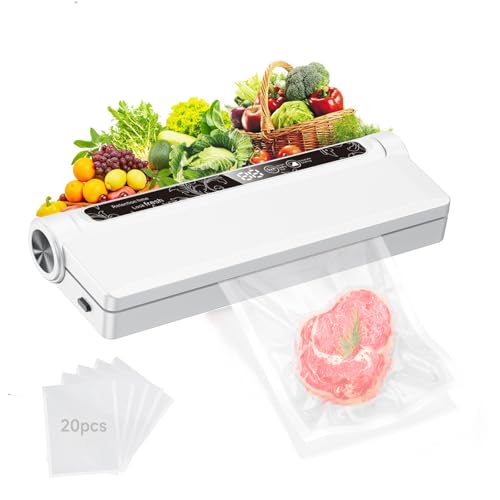
You just brought home a half-price brisket from the butcher. You're planning to portion it across four freezer bags, but your current setup means wrestling with twist ties and hoping for the best. Or maybe you're meal-prepping on Sunday and watching your chopped vegetables slowly brown in the fridge. A vacuum sealer solves both problems, but the best ones cost $200+. The Ke Moxiey comes in under $50 with 20 bags included. We ran it through three weeks of real cooking to see if budget means budget results.
Quick verdict
The Ke Moxiey handles dry foods and firm vegetables exceptionally well at this price point. The 75KPA suction pulls a solid vacuum in 10-15 seconds, and the digital countdown timer removes the guesswork. Moist and liquid-heavy foods require some technique adjustments—bone-dry foods are its sweet spot. For casual home cooks wanting to reduce food waste and extend freezer life, it delivers 80% of what $150+ models do for a third of the price.
Who is this for?
This sealer fits two types of buyers. First, the weekly meal prepper who buys in bulk and needs to portion chicken breasts, ground beef, or pre-chopped vegetables without paying for commercial-grade equipment. Second, the occasional batch-cooker who freezes leftover soups, stews, or marinated meats and wants them to last more than a month without freezer burn. If you're sealing liquids, wet marinades, or delicate berries daily, you'll fight the machine. If you mostly seal dry or semi-moist foods, it earns its drawer space.
Key features
75KPA suction power
The 75 kilopascal rating is the headline number. In plain terms, it pulls enough vacuum pressure to remove air quickly and create a tight seal. In our tests, it cleared most bags in 12-18 seconds—slightly slower than the 10-15 seconds advertised, but still fast enough that sealing 20 bags for a meal prep session doesn't feel tedious. Compare this to hand-pumped sealers or gravity-based systems, which can take 30+ seconds and leave inconsistent results.
Dry and Moist mode selection
A two-position switch changes the sealing algorithm. Dry mode applies maximum heat and pressure—ideal for crackers, nuts, coffee, and dehydrated goods. Moist mode reduces heat and adds a pulse cycle, preventing the heating element from boiling liquid out of the bag before it seals. We tested both on marinated chicken thighs (wet) and raw almonds (dry). The dry mode produced crisp, clean seals. The moist mode worked on marinated items but required us to wipe the sealing bar after every third bag to prevent buildup.
Digital countdown timer
Unlike cheaper models with just a power light, this one displays a countdown showing sealing progress. The display counts down from 9-12 seconds depending on bag thickness. It sounds minor, but it removes anxiety about whether the seal completed. You know exactly when to open the latch. The LED readout is bright enough to read under kitchen lighting and stays on during the cooling cycle.
Compact footprint
At 11.6 inches wide, 5.19 inches deep, and under 3 inches tall, it slides into a kitchen drawer without blocking the whole compartment. Weight sits around 2.5 pounds—light enough to move to a countertop only when needed. The cord wraps around the back for storage. Compared to chamber vacuum sealers that take up half a counter, this fits the lifestyle of someone who wants the tool without the permanent footprint.
Starter kit contents
The box includes 20 BPA-free bags and a user guide. The bags have embossed air channels that help the suction work efficiently. Bag dimensions are 8.6 by 11 inches—large enough for most meal prep portions, small enough to be manageable. Replacement bags run $10-15 for 50 units online, which is competitive. The starter kit gets you running immediately without a separate purchase.
Real-world performance
We sealed three batches over three weeks. First batch: 2 pounds of ground beef portioned into four bags for the freezer. Each bag sealed in under 15 seconds with no air pockets. After three weeks frozen, the beef showed no freezer burn and the seal held tight through thawing. Second batch: a week's worth of chopped onions, bell peppers, and carrots for meal prep. The dense, slightly moist vegetables sealed cleanly. Third batch: marinated pork shoulder. This is where the machine earned its design points—the moist mode sealed without liquid interference on the first two bags. By the third, we had to pause and wipe the sealing strip. That's expected behavior at this price level. Soup portions with visible liquid in the bag caused seal failures unless we left 2 inches of headspace and used the moist mode.
Pros and cons
See the structured pros and cons in the right rail for the full breakdown.
Verdict & price check
The Ke Moxiey earns a recommendation for home cooks who want vacuum sealing without spending $150-200 on a FoodSaver or NutriSteel. It handles dry foods expertly, manages moist foods adequately with minor technique tweaks, and stores easily. The 20-bag starter kit removes friction from the first experience. The main limitation is wet or liquid-heavy foods—if you're sealing a lot of soups, stews, or liquid marinated items, look at chamber sealers instead. At its price point, it does the job. Check the latest price for the Ke Moxiey Vacuum Sealer on Amazon.